-
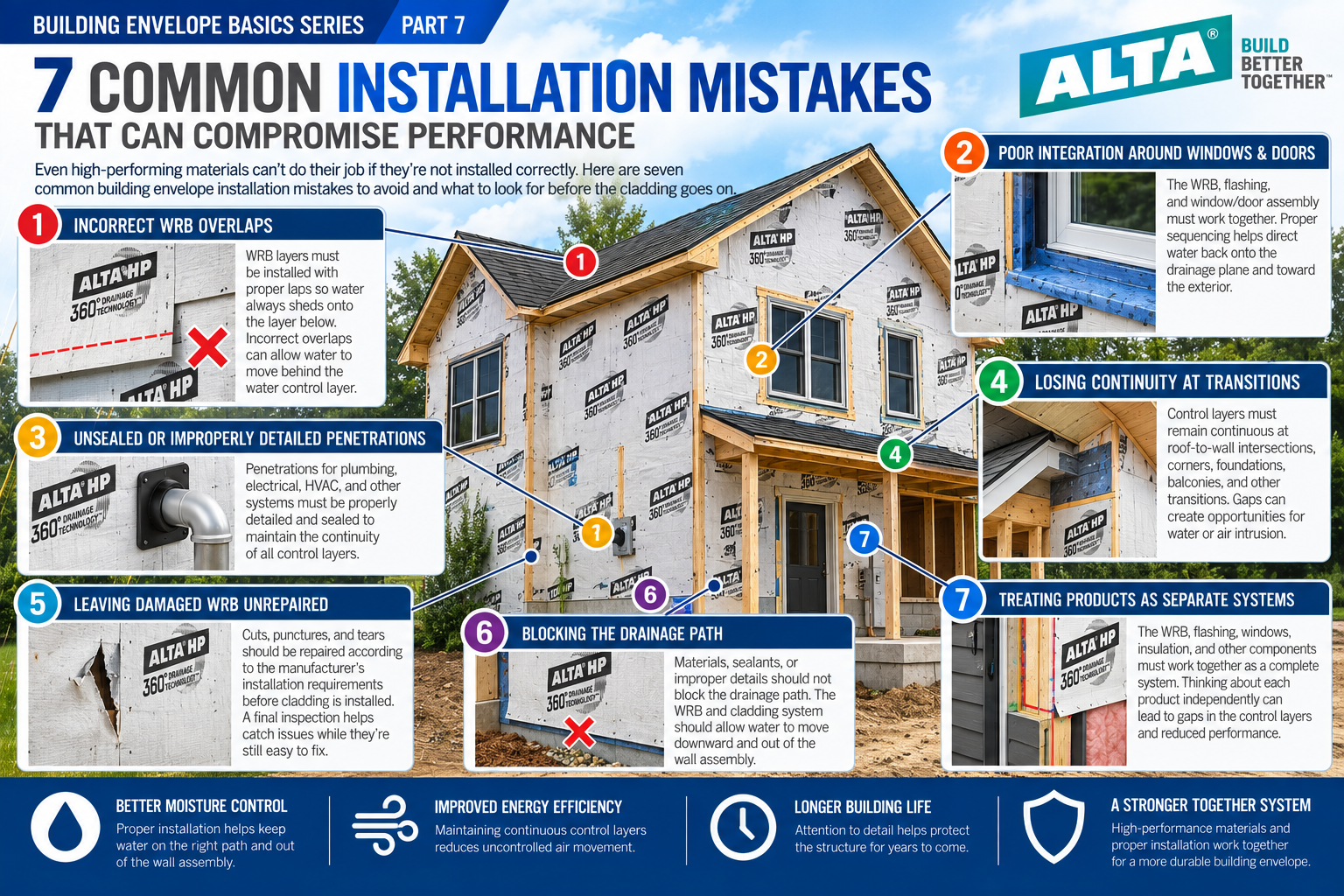
Building Envelope Basics: 7 Common Installation Mistakes That Can Compromise Performance
A high-performing building envelope starts with good design and the right materials, but installation is where those plans become reality. Even small gaps, incorrect overlaps, or poorly detailed transitions can interrupt the control layers that manage water, air, vapor, and heat. Throughout our Building Envelope Basics series, we’ve explored how these layers…
-
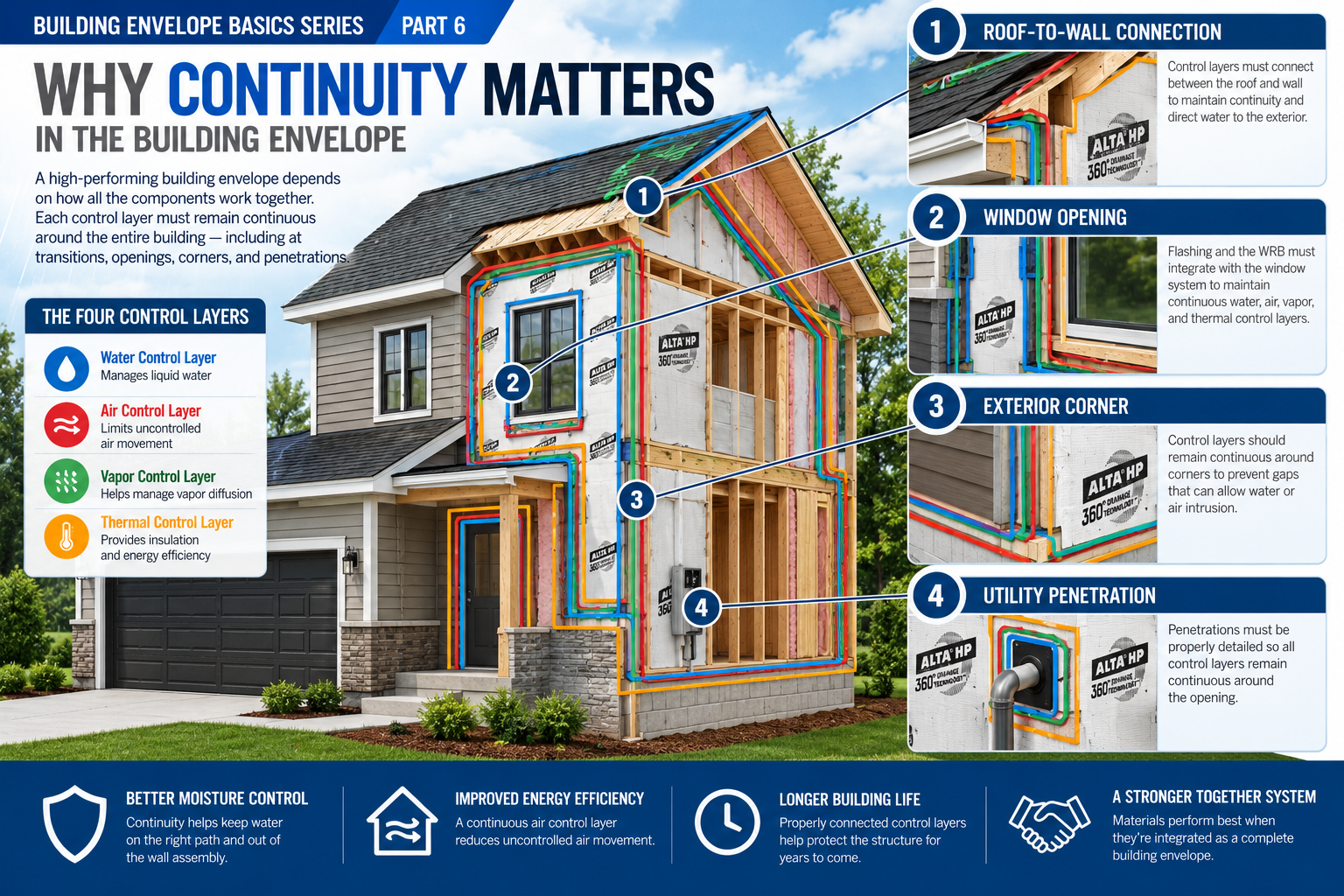
Building Envelope Basics: Why Continuity Matters in the Building Envelope
A high-performing building envelope depends on more than selecting the right materials. Weather-resistive barriers, flashing, insulation, air barriers, and drainage systems can each perform their individual functions well, but the building envelope is only as effective as the connections between them. This concept is known as continuity. Each control layer should…
-

Building Envelope Basics: Why Flashing Is Critical to Building Envelope Performance
When discussing building envelopes, products like weather-resistive barriers, insulation, and exterior cladding often receive the most attention. Yet one of the most important components is frequently hidden from view: flashing. Flashing may not be the most noticeable part of a wall assembly, but it plays a critical role in directing water…
-
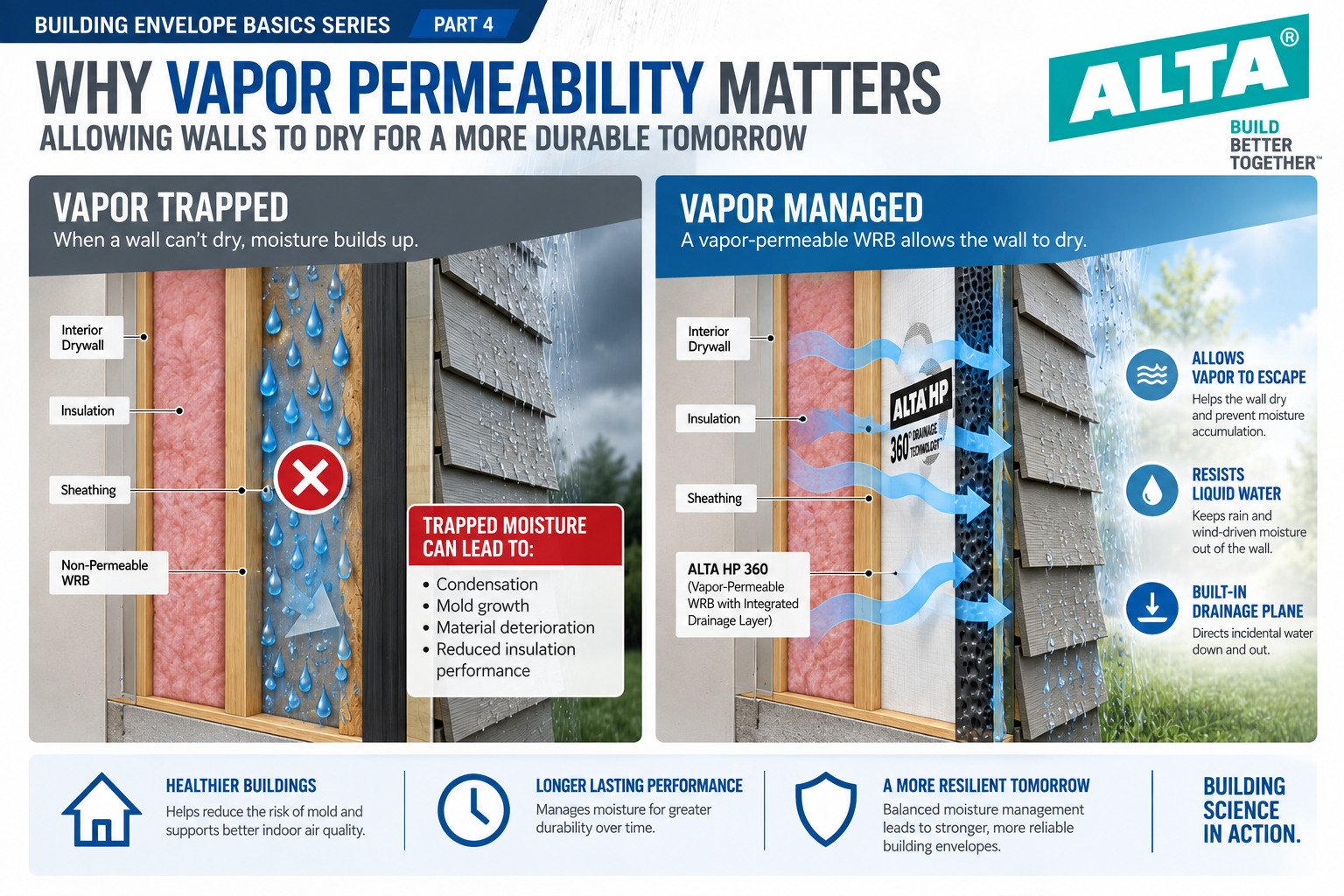
Building Envelope Basics: Why Vapor Permeability Matters
When people think about protecting a building from moisture, they often focus on keeping water out. While that’s certainly important, an equally important question is: What happens if moisture gets inside the wall? No building envelope is completely immune to moisture. Construction moisture, humidity, small air leaks, and seasonal environmental changes can…
-
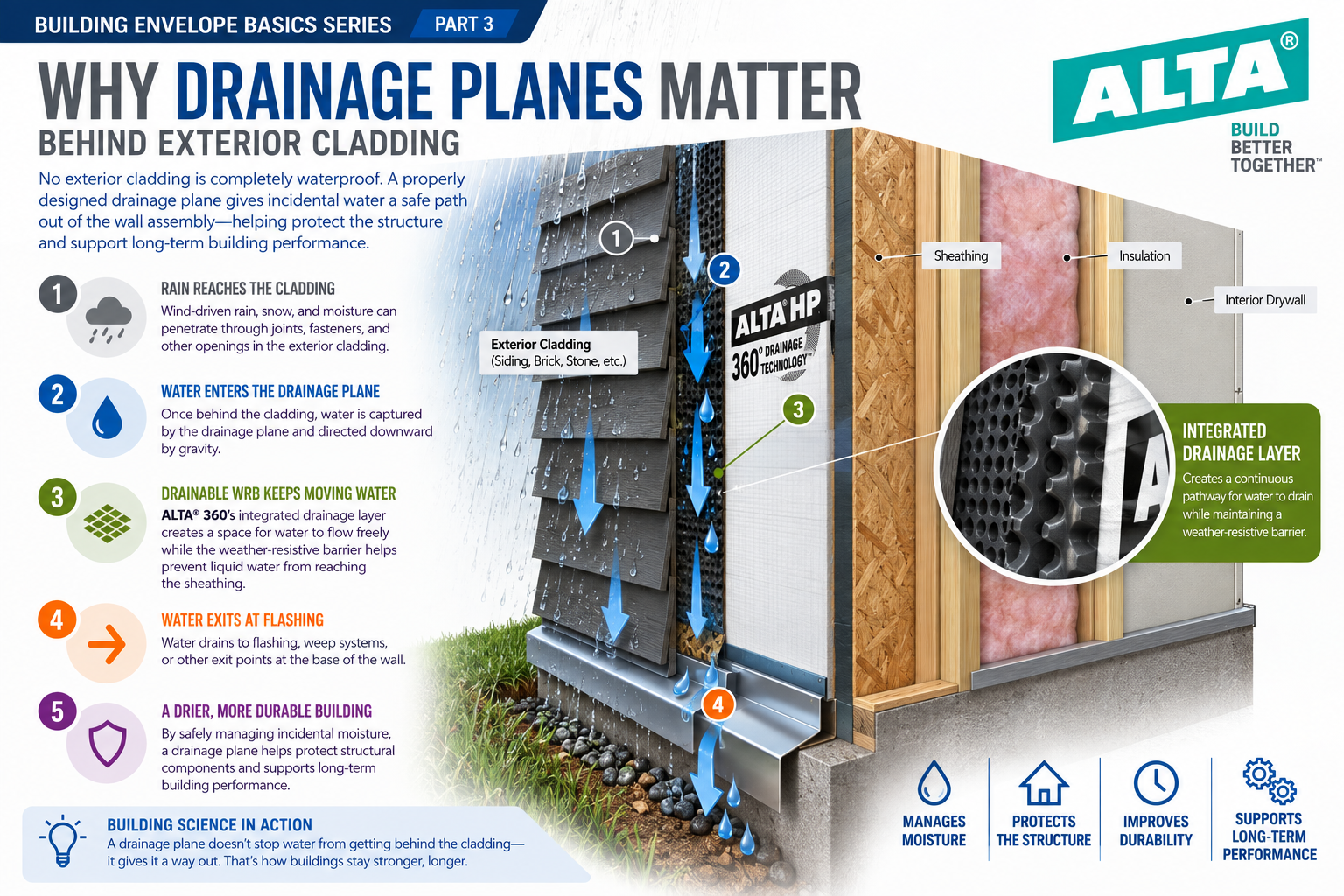
Building Envelope Basics: Why Drainage Planes Matter Behind Exterior Cladding
Modern exterior cladding is designed to protect buildings from the elements, but no cladding system is completely waterproof. Wind-driven rain, changing weather conditions, and normal building movement can allow small amounts of water to penetrate behind siding, brick, stone, or other façade materials. This reality is why today’s building envelope…
-
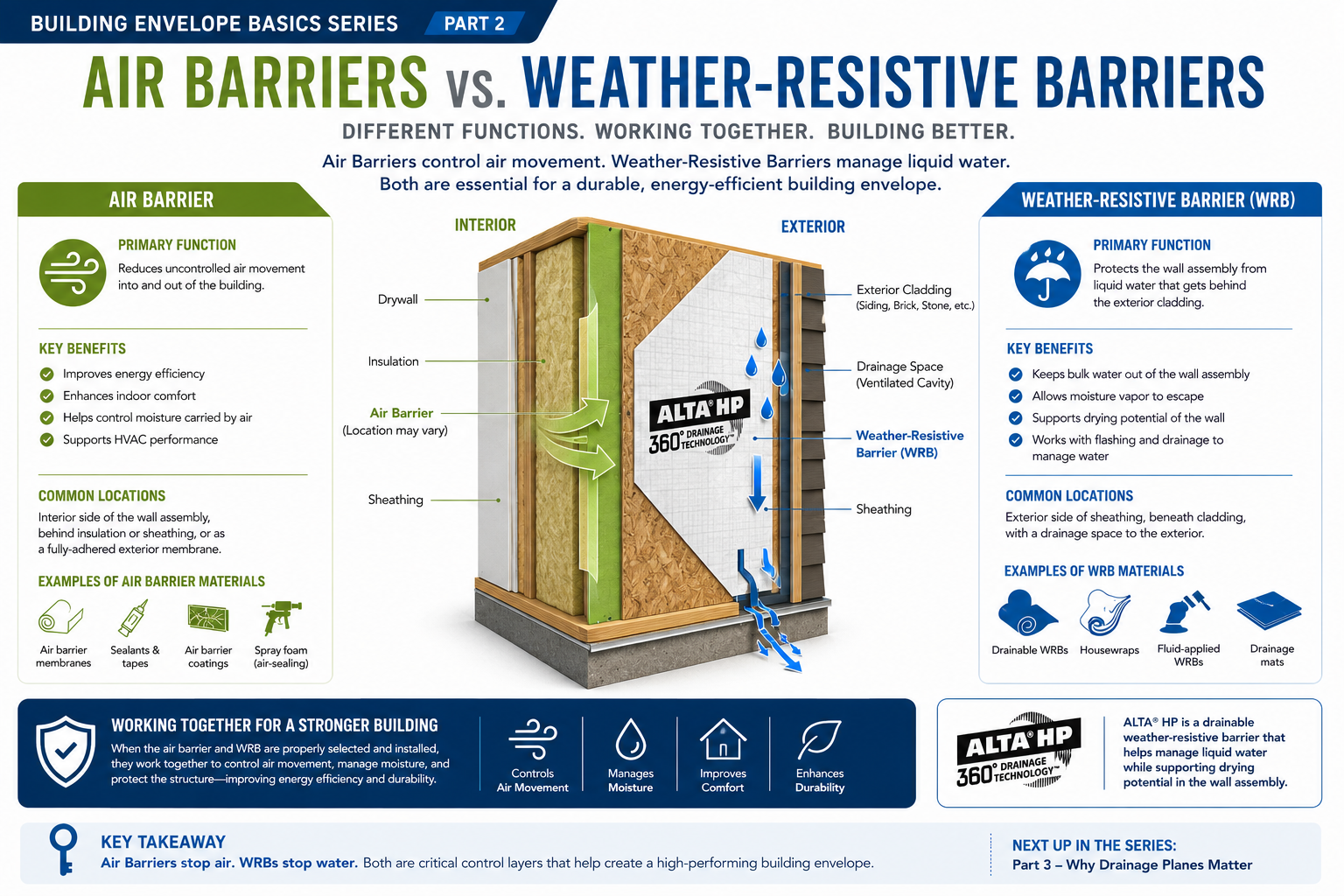
Building Envelope Basics: Air Barriers vs. Weather-Resistive Barriers
As building codes continue to evolve and structures become more energy efficient, understanding the role of each building envelope component has never been more important. Two of the most commonly discussed systems are air barriers and weather-resistive barriers (WRBs). Although these terms are sometimes used interchangeably, they serve different purposes within a wall…
-
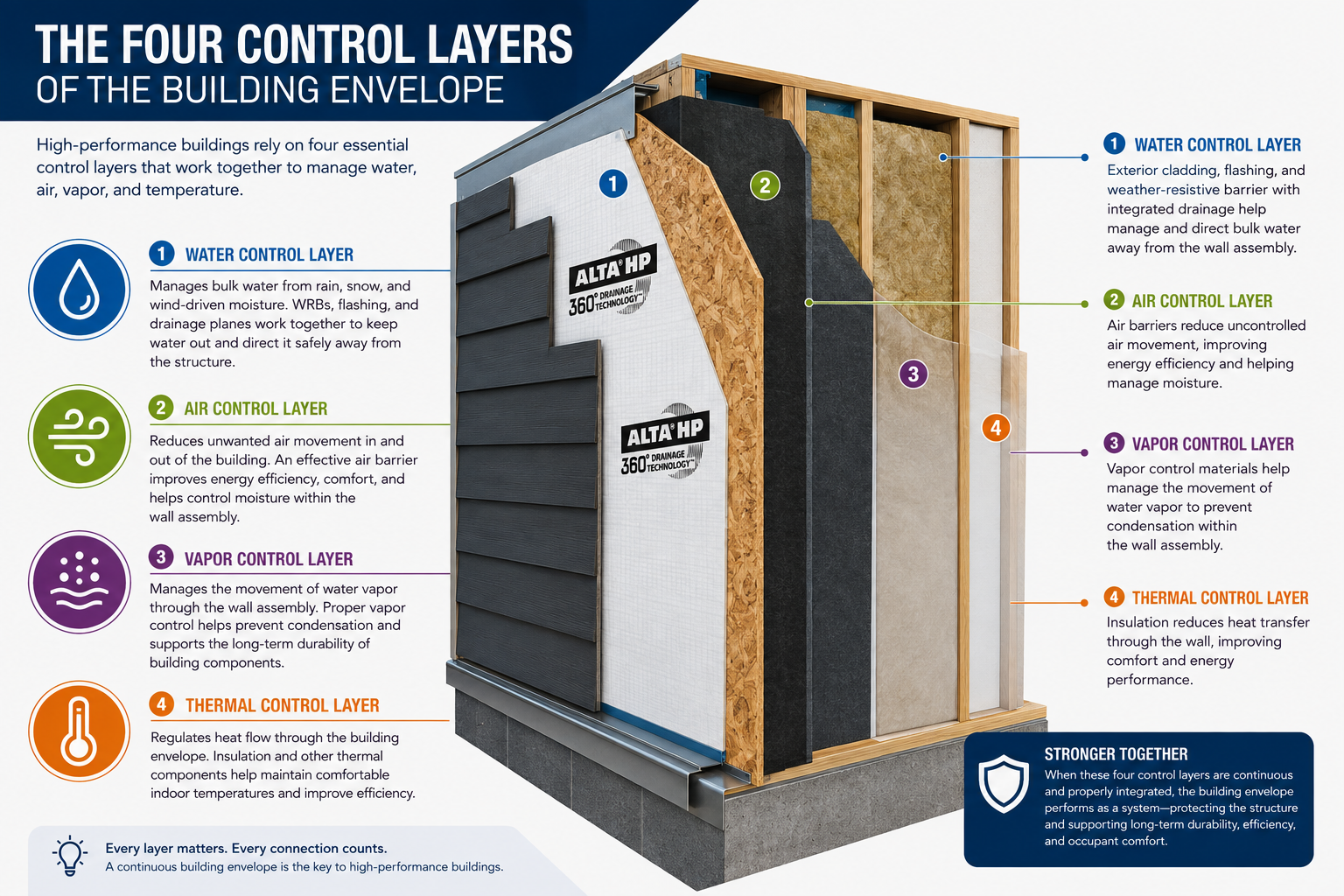
Building Envelope Basics: Understanding the Four Control Layers
Modern buildings are designed to do much more than provide shelter. They are expected to improve energy efficiency, manage moisture, enhance occupant comfort, and withstand years of environmental exposure. Achieving these goals requires more than selecting quality building materials—it requires designing a building envelope that functions as a complete system.…
-
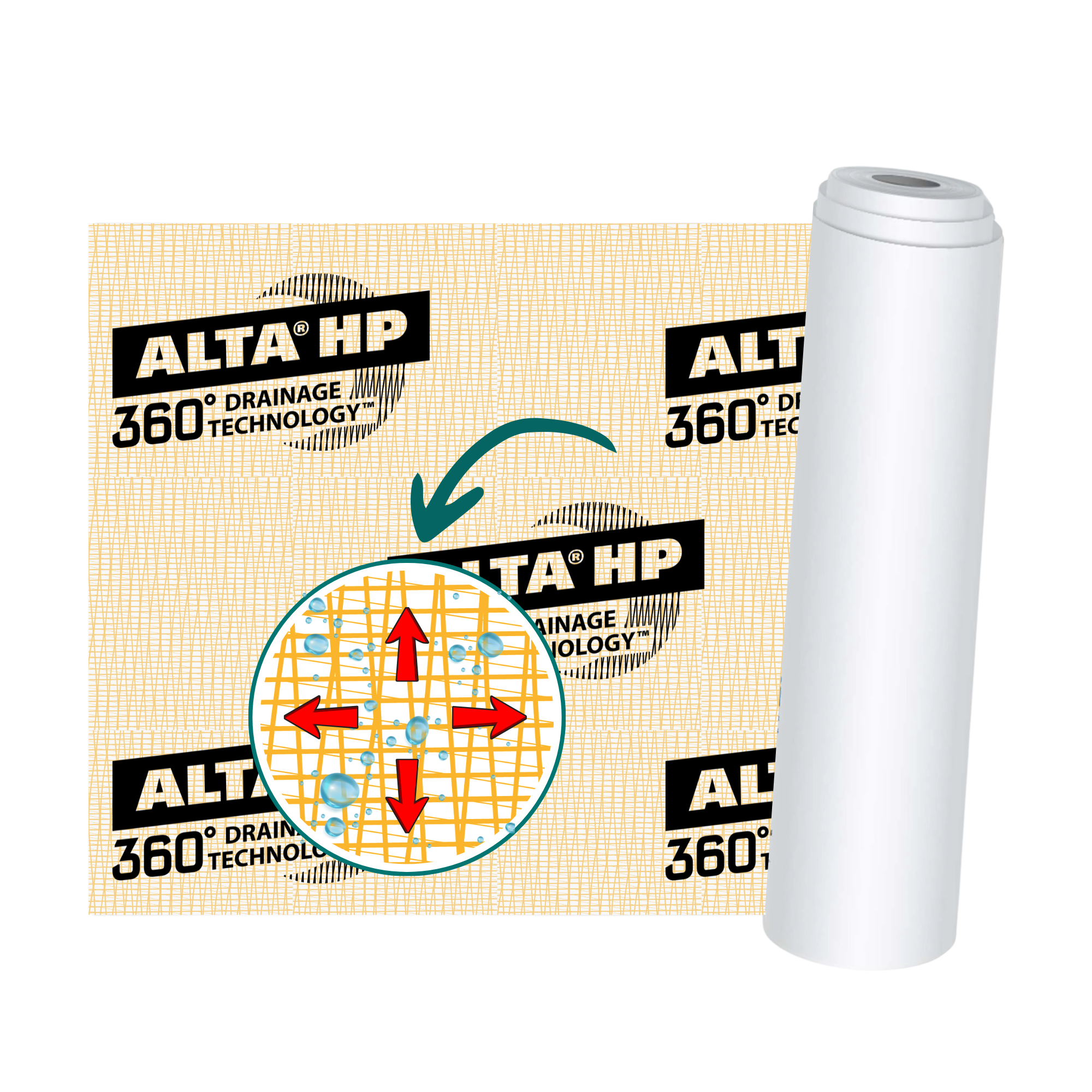
Why a Continuous Building Envelope Matters
The performance of a building depends on more than the materials used to construct it. It depends on how those materials work together as a system. While insulation, exterior cladding, and structural components each play an important role, the building envelope serves as the first line of defense against air,…
-
Why Wall Systems Need to Dry in Both Directions
Modern building envelopes are designed to manage moisture, improve energy efficiency, and protect structures from the elements. While much attention is given to preventing water intrusion, an equally important consideration is how a wall system dries once moisture enters the assembly. Because no building is completely immune to moisture, successful…
-
Why Moisture Management Starts Before Water Gets Inside
When people think about moisture management in a building envelope, the focus is often on keeping water out. While preventing water intrusion is important, effective moisture management actually begins much earlier in the design process. Modern wall systems are built with the understanding that some moisture will inevitably find its…