

Tag: Durable Housewrap
-
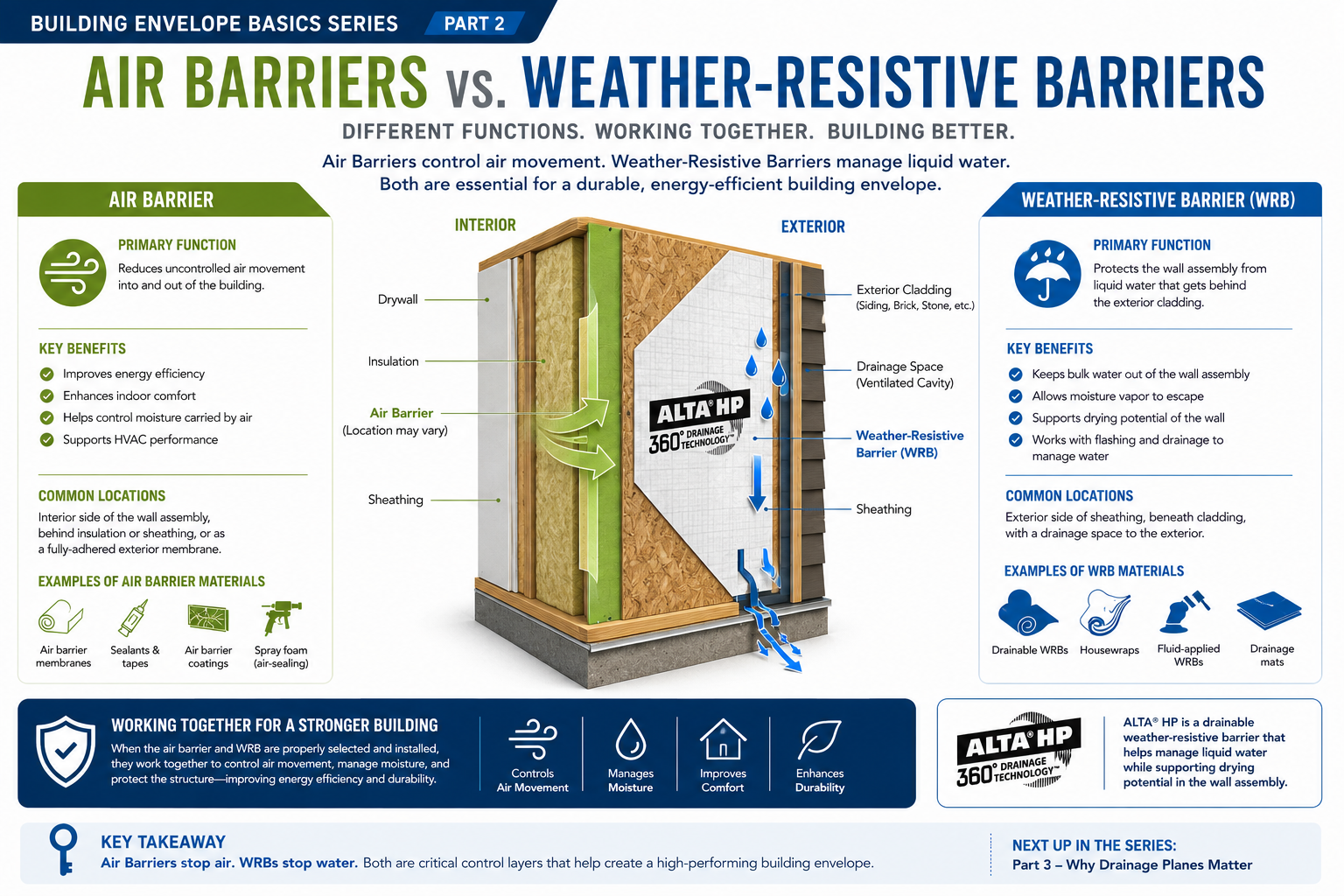
Building Envelope Basics: Air Barriers vs. Weather-Resistive Barriers
•
As building codes continue to evolve and structures become more energy efficient, understanding the role of each building envelope component has never been more important. Two of the most commonly discussed systems are air barriers and weather-resistive barriers (WRBs). Although these terms are sometimes used interchangeably, they serve different purposes within a wall…
-
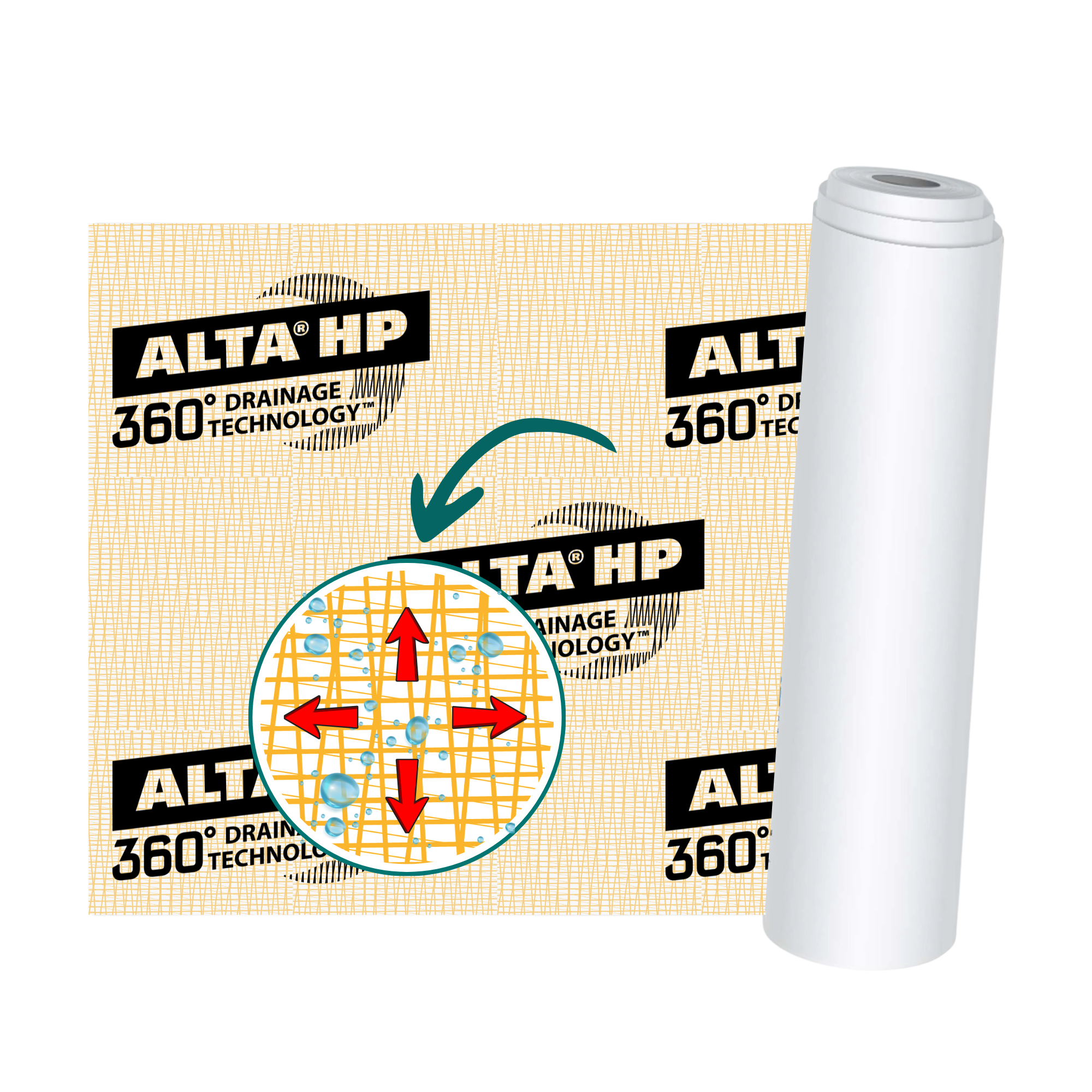
Why a Continuous Building Envelope Matters
•
The performance of a building depends on more than the materials used to construct it. It depends on how those materials work together as a system. While insulation, exterior cladding, and structural components each play an important role, the building envelope serves as the first line of defense against air,…
-

Why Breathability Alone Isn’t Enough in House Wrap Design
•
Modern wall systems are designed to manage both air and moisture, making house wrap performance more important than ever. For years, breathability has been a major focus in house wrap design because it allows water vapor to escape from wall assemblies. While vapor permeability is important, breathability alone does not…
-
What Makes a High-Performance Vapor Barrier in Modern Construction?
•
As construction methods evolve, vapor barriers are no longer viewed as simple plastic liners tucked out of sight. In modern building systems, vapor barriers play a critical role in moisture control, durability, and long-term building performance. With tighter building envelopes, more demanding code requirements, and increased awareness of moisture-related failures,…
-
Drainable vs Traditional House Wraps: What Builders Need to Know
•
Choosing the right house wrap is a critical decision for long-term building performance. While traditional flat house wraps have been used for decades, changing construction methods, tighter building envelopes, and increased moisture exposure have made drainable house wraps more important than ever. Understanding the difference between drainable vs traditional house wraps can help builders…
-

Why Drainage Matters Most in the Winter: Moisture, Freeze/Thaw and the Building Envelope
•
As temperatures drop, homes face some of the harshest conditions of the year. While builders often think about insulation, air sealing and heating efficiency during winter, one of the most overlooked risks is moisture trapped behind the siding. Winter weather systems bring a combination of cold rain, melting snow and fluctuating…
-
Behind the Layers: The Science of ALTA® 360° House Wrap
•
When it comes to protecting walls from moisture, not all house wraps are engineered the same. Builders today need materials that can manage water effectively, breathe naturally, and stand up to tough jobsite conditions. ALTA® 360° Drainable House Wrap delivers all three — thanks to a simple but powerful two-layer design that…
-

House Wrap vs. Weather-Resistant Barriers: What’s the Difference?
•
In the world of building envelopes, terms like house wrap and weather-resistant barrier (WRB) are often used interchangeably. But while both play a critical role in protecting a structure, they’re not always the same thing. Understanding the difference can help builders, architects, and contractors choose the right material for each project — and avoid…
-

The Top 3 Mistakes When Installing House Wrap (and How to Avoid Them)
•
Installing house wrap is one of the most important steps in protecting a building from moisture and air intrusion. But even experienced builders can make errors that compromise its effectiveness. Small installation mistakes can lead to costly repairs, reduced energy efficiency, and long-term damage. In this post, we’ll break down…
-

ALTA® 360° Housewrap with Built-in Drainage and Next-Generation Durability
•
Longevity, quality, and peace of mind – these are the ideals any builder strives to bring to their customers and clients. Whether you’re constructing commercial buildings, or framing out family homes, wraps and housewraps are the barriers that you trust to keep water off of permeable materials – even when…